
Review the EMR and consider changes to enhance its usage and functionality for staff
EMR Changes: Simplify the PIVC Documentation Process
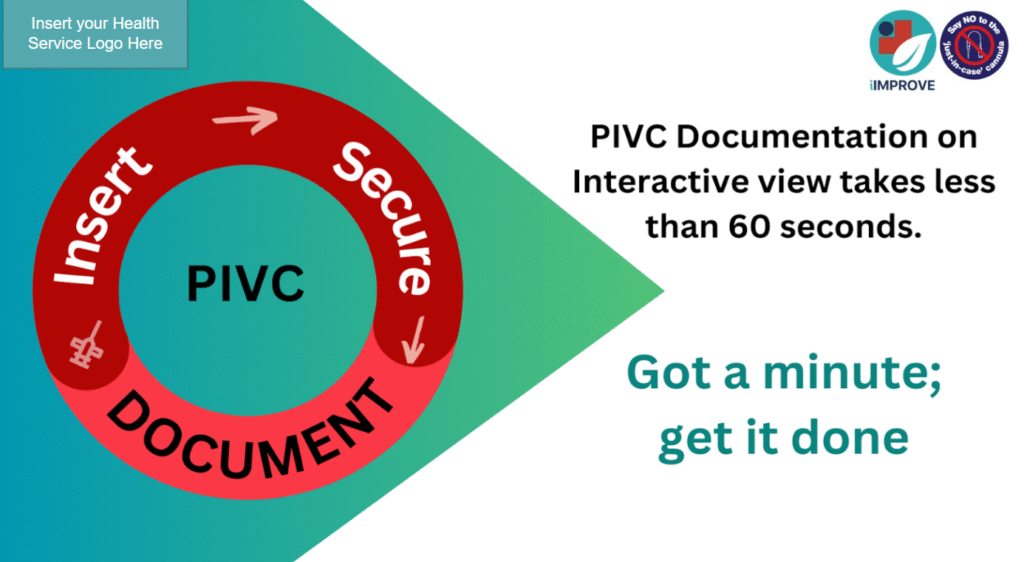
Our study found that PIVC documentation in the participating health services is often low and incomplete. This is largely due to the current documentation process being complex and time-consuming, leaving clinicians with insufficient time between patient care tasks to complete it. We recommend reviewing and streamlining the EMR documentation process to address this issue
Recommended actions
- Review the EMR documentation workflow in your health service (e.g., how and where lines are recorded in notes, or Interactive View) and identify potential improvements
- Engage with your EMR team to discuss and finalise proposed changes
- Update local policy and the learning package, and educate clinical staff to reflect the new documentation process
PIVC Documentation Education Session Slides:

EMR Changes: Implement I-DECIDED® tool in EMR
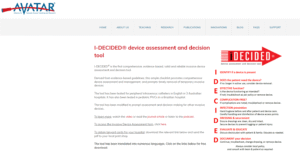
Implement the I-DECIDED® tool to support best practices in PIVC management. The tool has been validated for PIVCs in three Australian hospitals and for pediatric PIVCs in a Brazilian hospital. Additionally, it has been adapted to support decision-making for other invasive devices, making it a valuable resource for enhancing clinical practice. It has been demonstrated to reduce idle PIVC by 10%. It is copyrighted but freely available for use by both national and international audiences. Click on the image below to access further information.
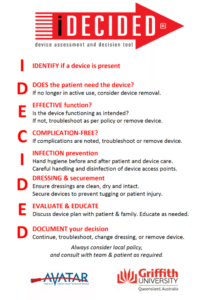
I-DECIDED® Slides:
EMR Changes: ED Time Out to Wards
Goal
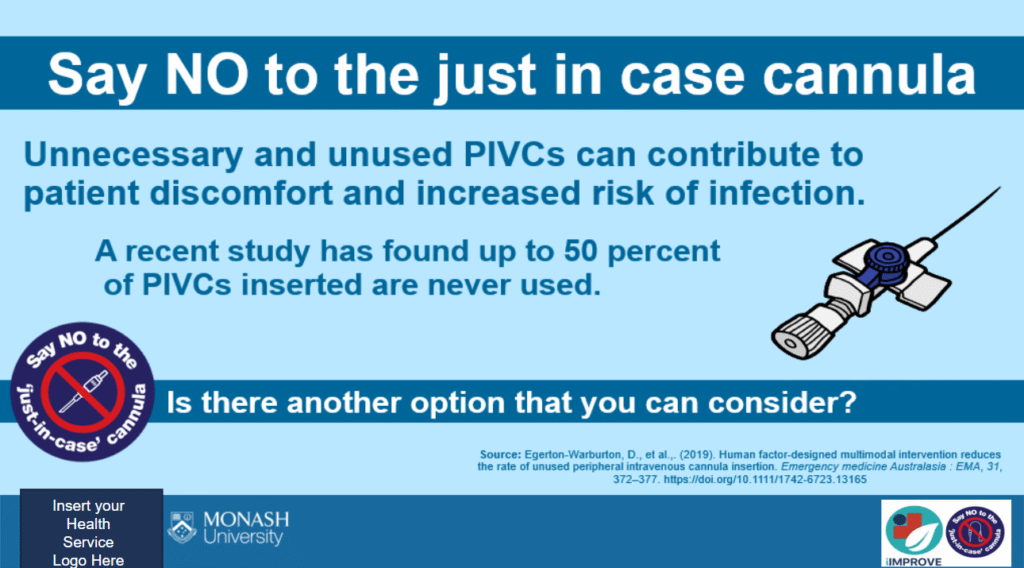
Reduce infection risk, improve documentation, and avoid unnecessary cannulas.
Implementation (EMR)
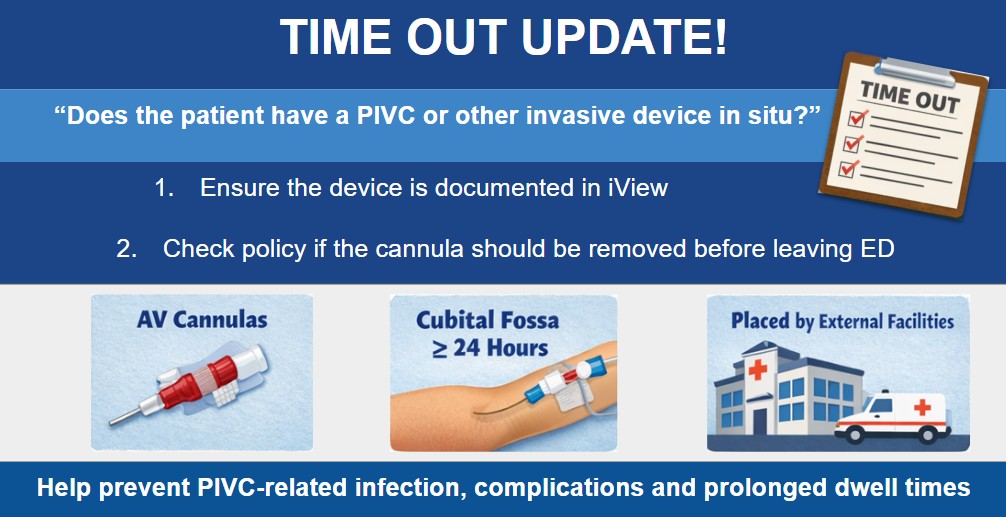
- Embed the Time Out question into the ED-to-ward transfer workflow in EMR:
“Does the patient have a PIVC or other invasive device in situ?” - “If yes, ensure device is documented in iView or removed if policy recommends.”
- Make completion mandatory prior to transfer
Before transfer from the ED to the ward
1. Complete Time Out question
“Does the patient have a PIVC or other invasive device in situ?”
2. Check & document
- Confirm device presence
- Ensure PIVC is documented in the appropriate section of EMR
3. Remove if:
- Inserted externally (asepsis uncertain)
- In cubital fossa ≥24 hours
- Inserted by the ambulance service
Poster Template
Provide Instructions to Clinical Staff on How to Document PIVC in Medical Record
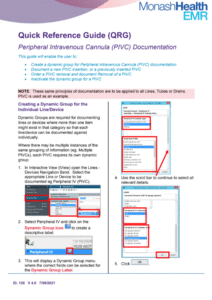
1. Investigate available instructions at your health services, such as the “Quick reference guides”, “Policy on PIVC present but not documented.” and instruction videos on how to document PIVCs.
Example of Quick reference guide
Video: Documenting PIVC in iEMR (Queensland Health)
Those demonstration were conducted in a test domain using fictitious patient information.

Video: Documenting PIVC in Cerner EMR
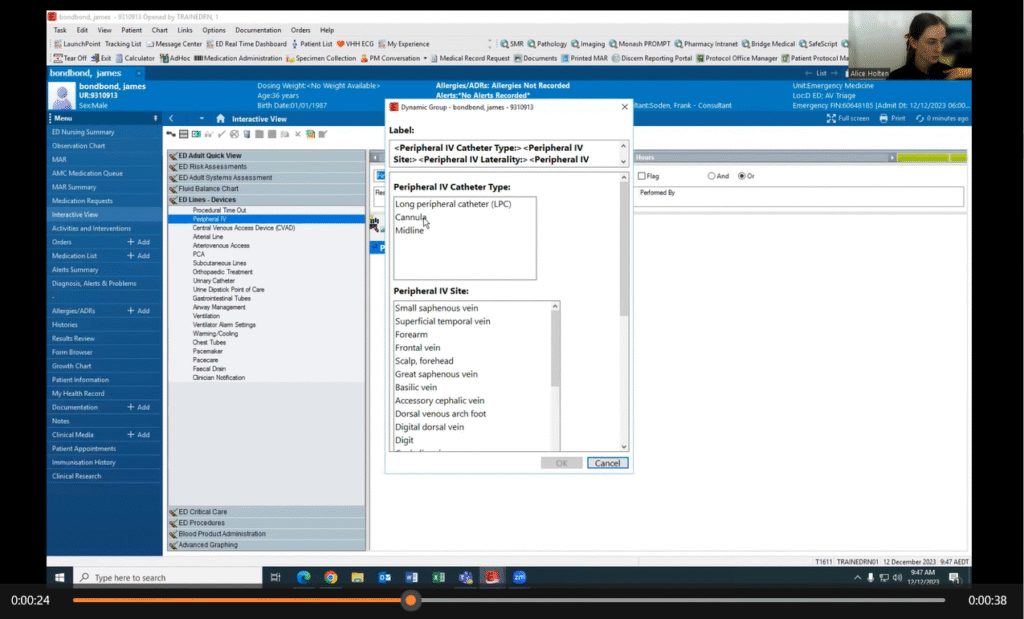
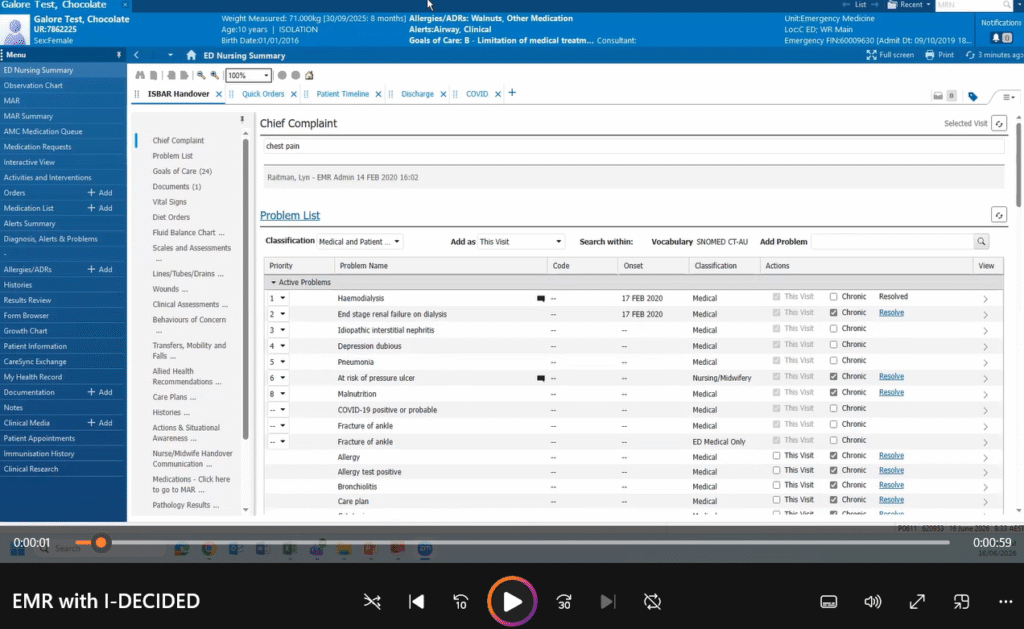
Video: Documenting PIVC with I-DECIDED® tool in Cerner EMR
2. Request the nurse unit managers (NUMs) and medical director to disseminate the instructions to the staff

Guidance from the Medical Director: Choosing PIVC Orders – email template
- Review the medical record system and propose changes to enhance its usage and functionality for staff
- Implement “I-DECIDED” tool in EMR